News and Events > Blog

Not so long ago, humanoid robots were strictly bound to the realms of science fiction movies and books.
But since the explosion of AI and technological advancement, they are no longer confined to the imagination.
As researchers push closer to realizing robots capable of humanlike behavior, we find ourselves at a unique intersection that opens up a massive opportunity while revealing serious ethical concerns.
Let’s see how the humanoid robots of the future present themselves in today’s world.
A Brief Look at Where We Are Today
The market value of humanoid robots is rising exponentially. Valued at $2.92 billion in 2025, it’s expected to grow to $15.26 billion over the next five years.
Demand is hot, and several key players are dominating the scene:
- Tesla Optimus Gen 2 has reached the mass production stage for its robots, which are designed to perform boring, repetitive or unsafe tasks.
- Boston Dynamics, renowned makers of four-legged Spot, is scaling up production of its Atlas humanoid, the world’s most dynamic robot.
- Agility Robotics has partnered with GXO Logistics to deploy its Mobile Manipulation Robot to perform repetitive warehouse tasks
- Apptronik is known for its modular, industrial robots for warehouses and factories, drawing attention from Amazon.
There are more, too, including Engineered Arts, PAL Robotics, Sanctuary AI and Softbank Robotics.
Technological Milestones
It should come as no surprise that AI has played a pivotal role in the development of robots, which are now capable of planning, reasoning and spatial awareness.
These robots are also now able to recognize and respond to subtle facial expressions and intonations of speech. They can even act on emotional cues, making them able to interact socially with humans.
Lightweight materials have paved the way for greater flexibility and improved joint technology, allowing for fluid, natural movement.
One example is the animatronics used for the new Harry Potter and the Battle of the Ministry ride at Epic Universe. The movements of the robots are so realistic and life-like that they are being mistaken for human actors.
Current Limitations
The main limitation of human android robots is their runtime.
Robots require substantial energy to operate, leading to a limited average runtime of two to four hours. This constraint limits productivity in certain applications, such as round-the-clock operations.
Payload is another concern and is typically maxed out at 20 to 30 lbs. This restricts applications where heavy lifting is required, such as in logistics or manufacturing.
On the commercial side, cost remains prohibitively high, and there are questions around their reliability and safety around humans.
Key Technologies Driving Future Development
A robot is made up of many moving parts and components, so there are several key areas required for advancing humanoid technology.
The more these technologies develop, the closer anthropomorphic robots will resemble the real thing.
Artificial Intelligence and Machine Learning
Large Language Models (LLMs) and Reinforcement Learning (RL) are key to helping robots understand natural language commands, apply reason to tasks and perform autonomous planning.
Humanoid artificial intelligence also helps accelerate learning-based methods, such as imitation learning (to mimic human motion) and representation learning (to adapt to new environments).
It’s also used at the back end, so robots can self-diagnose maintenance issues and perform safety monitoring, reducing the need for human intervention.

An example of these learning-based methods: Figure O2 by Figure AI features an onboard vision language model. Trained with OpenAI, the model can understand natural language commands and visual cues. These robots are currently used to perform assembly and material transportation at BMW.
Perception, Decision-Making and Adaptive Learning
Multi-modal perception systems, like cameras, LiDAR and facial recognition, give robots the capability to interact socially, while tactile arrays allow them to “feel” physical objects.
Semantic scene understanding and Simultaneous Localization and Mapping (SLAM) are crucial for helping robots navigate busy or changing environments, such as crowded areas.
Adaptive learning enables robots to modify behavior in real time, without relying on human intervention to do so.
An example: Optimus Gen 2 leverages Tesla’s Full Self Driving software along with cameras and sensors to enhance spatial awareness. It can adapt to variable tasks, like folding clothes as well as navigate obstacles on the floor.
Mechanical and Material Innovations
Soft materials, like elastomers and fluidic actuators, are now used to give robots better impact absorption and surface adaptability.
Hard materials, like carbon composites and advanced alloys, provide the necessary structure and strength without compromising movement or flexibility. There are even tendon-muscle designs that can mimic human muscular movement.
Self-healing materials are an emerging technology that can automatically repair microdamage, reducing the need for maintenance and downtime.
One example is Engine AI SE01, which features a biometric joint and motion design. This, combined with deep reinforcement learning, allows it to move fluidly with a human-like gait.
Sensor and Actuator Systems
Touch, recognition and balance are important for robot stability, functionality and safety through a variety of situations.
Tactile sensors used on the hands, palms and “skin” of the robots allow delicate object manipulation, emulating fine motor skills.
Vision systems equipped with facial and body recognition and gaze tracking can identify human intent and social responses.
Gyroscopes, accelerometers and foot force sensors retain balance and maintain stable bipedal walking or running motions. They can also recover stability after the robot is imbalanced.
Control loops with a millisecond response time also help keep robots stable, and built-in fault tolerance allows the robots to keep functioning even if a component fails.
For instance, Agility Robotics Digit has an advanced balance system and tactile sensors that enable it to move safely around cluttered floor spaces and work alongside human coworkers.
Power, Battery Improvements and Energy Efficiency
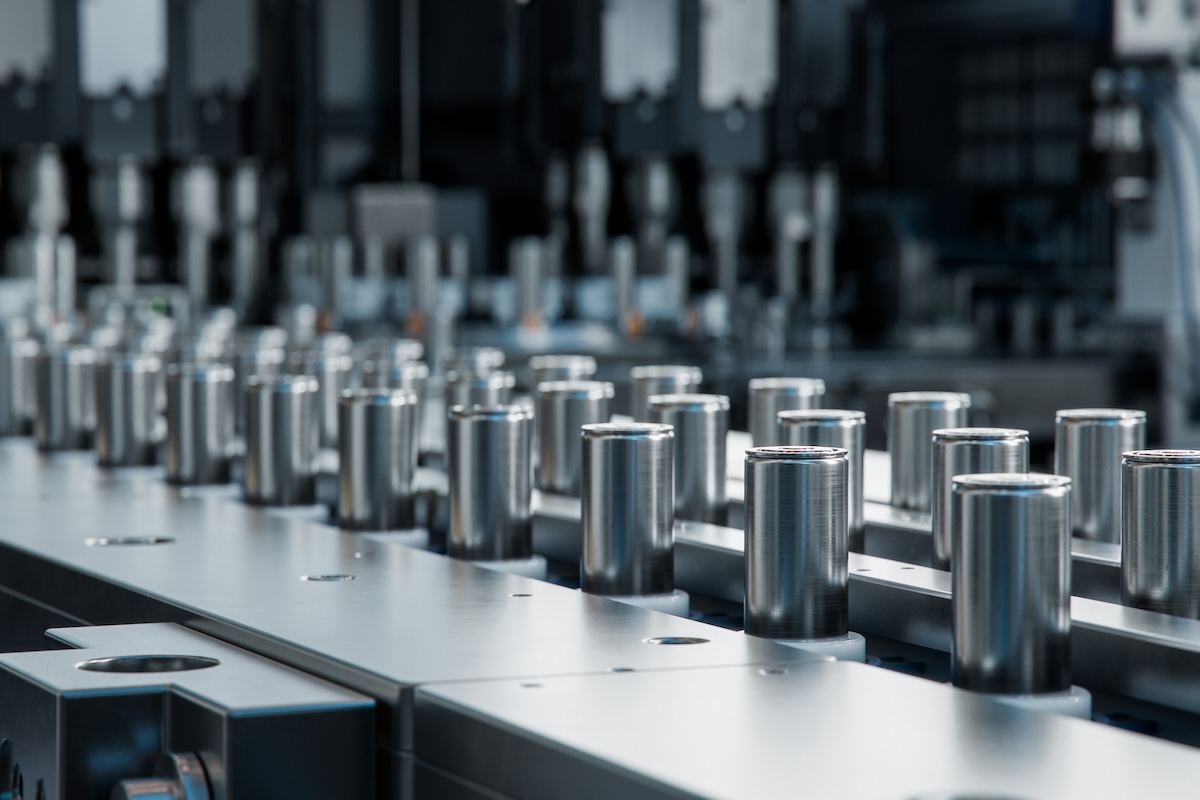
Battery technology remains one of the biggest challenges for the future of humanoid robots. Advancements in high-density batteries have resulted in lighter, safer cell technology with longer run times and fast charging capabilities. Batteries with increasingly high energy density can give manufacturers flexibility in design and functionality, creating new use cases and opportunities as battery technology evolves.
Hybrid power systems use a combination of fuel cells, energy harvesting and supercapacitors to improve run times. Built-in energy efficiency strategies, such as reducing system operations, can also extend run time.
Additionally, autonomous charging with wireless chargers or docking stations reduces the need for humans to intervene and “plug” the robots in.
Modular systems with swappable batteries offer another way to keep downtime to a minimum. The UBTech Walker S2, for instance, can manage continuous operation thanks to its autonomous swappable battery system.
Future Applications of Humanoid Robots
The future of humanoid robots looks bright. Once the technology reaches the point where mass production is possible, it’s likely we’ll see them in just about every industry, especially where difficult, mundane or repetitive tasks are common.
Below are some industries that are particularly well-suited to incorporate humanoid robots.
Healthcare
The healthcare industry shows lots of promise for future humanoid robots.
They can assist elderly individuals with daily tasks and remind them to take medication. They will even be able to run errands and call for help in an emergency.
Robots could also help rehabilitate patients, support them with mobility issues and perform diagnostic tests. For instance, Hanson’s Robotics “Grace” is designed as a nurse assistant that can take temperatures and diagnose patients.
Robots will also be particularly advantageous in a surgical setting. Their unmatched steadiness could be vital when performing precision surgery.
Education
Humanoid tutors could become commonplace in the classroom since they will have the ability to instantly provide information, switch up learning styles and adapt to knowledge levels and pace as needed.
They could be especially beneficial in a special education setting, where consistency and patience matter most.
Robotic classroom assistants could also help human teachers and give individual students tailored attention or carry out organizational and admin tasks.
Customer Service and Hospitality
Hospitality robots are already commonplace in Japan, introduced as a solution to plug the widening labor gap. You can find everything from robot waiters to hotels staffed by robots. One hotel even features robot dinosaurs as staff!
One key advantage these hospitality robots provide to tourists is the ability to switch languages as needed and provide personalized support, in addition to housekeeping tasks like cleaning or kitchen assistance
Domestic Help
Although not humanoid in form, domestic robots are already everywhere in our homes: robot vacuums, lawnmowers, smart speakers and more that make our lives easier every day.
As these robots become more advanced, they could eventually aid in completing common domestic tasks in an autonomous manner, precisely to a homeowner’s liking.
Robots could also provide essential companionship, especially to isolated individuals and the elderly. Aria, developed by Realbotix, is one such example, and can be customized with specific personality and character traits.
Industrial and Dangerous Occupations
Robots will prove essential in hazardous environments deemed too dangerous for humans. Everything from disaster zones (where drone deployment is becoming increasingly useful and prevalent), war zones and space exploration could eventually be handled by robots.
In industrial zones, robots would be ideal for jobs involving dangerous materials like chemicals and radioactive substances.
Social and Ethical Considerations
Of course, the ethical programming concerns surrounding a futuristic humanoid robot should not be taken lightly.
Who gets to decide their moral baselines and what a robot should or should not say?
Even if robots are programmed to be ethical, they can still make mistakes. ChatGPT is notorious for making up stories. Who’s to say future robots won’t do the same?
Who is accountable when robots do make a mistake or a bad decision? There will need to be strong regulations and accountability frameworks in place to manage these instances.
Can robots have “personhood” rights or a legal status? Can they demand autonomy? Protection? The limits around this are still unclear and being discussed.
There are clearly a number of difficult questions about the ethics of humanoid robots that must be answered sooner or later.
And that’s not to mention the final hurdle: public acceptance.
AI is already significantly impacting the workforce, causing many people to worry about the future of their career. Job displacement and the ensuing economic problems may increase when robots become commonplace.
Manufacturers and media will have to work hard to gain the public’s trust before humanoid robots can be widely accepted.
Challenges Ahead
Despite the optimistic projections, the road to mass deployment isn’t without its obstacles.
- High Cost: The cost of new technology is prohibitive to many. Today’s robots command a price of $50,000 or more, limiting them to large corporations and the ultra-rich.
- Public Trust: Modern day autonomous vehicles have been around for over a decade, with Waymo testing cars on public roads since 2015. Yet, ten years later, public trust is still incredibly low (around 13%). We can only imagine how long it may take for the public to accept that humanoid robots are safe to be around.
- Legality: Existing laws and regulations are not built to handle humanoid robots. New laws governing their use, ethics and safety must be established before they can become a part of our daily lives.
- Standardization: For robots to be useful at scale, their hardware and software ecosystems must be standardized and made compatible with our existing world. Shared communication protocols, modular hardware interfaces, software APIs and so on, will build common interoperability frameworks.
- Design: We need robots that don’t give us the creeps. It might sound funny, but “uncanny valley” is that feeling of discomfort when something isn’t quite “right.” And humanoid robots are very good at invoking that feeling. Do we aim for complete realism, where it’s hard to distinguish robots from humans? Or should we keep them robotic-looking yet socially expressive?
Final Thoughts
Humanoid robots straight out of a science fiction novel may arrive sooner than we think (with battery technology playing a major role in their functionality and adoption).
It’s a fascinating subject that provokes many questions and strong feelings, no matter who you ask. But there’s no denying that robots can help us immensely by taking on vital or dangerous tasks that benefit society.
If we integrate them carefully and adapt social structures and economic systems so humans don’t suffer from their introduction, it’s likely we will increasingly see humanoid robots having a place in our homes, jobs and society.